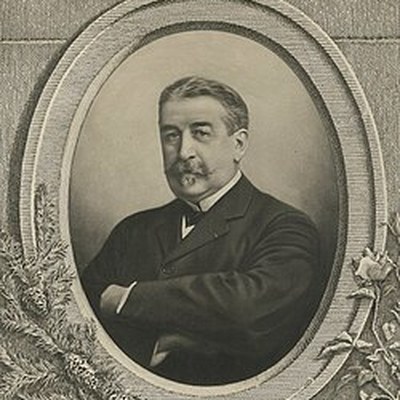
莫里斯·德·维尔莫兰
Maurice de Vilmorin
人物简介
1890年代接收法尔热寄来的杜仲种子,实现杜仲在欧洲的首次成功引种。
事迹
莫里斯·德·维尔莫兰(1849-1918)出身法国著名的维尔莫兰-安德里厄种业世家,在巴尔(Barres)建立私人树木园,即今法国国家树木园前身。国际树木学会《Trees and Shrubs Online》明确记载:杜仲于1890年代中期以种子形式由法尔热寄给维尔莫兰,是杜仲重返欧洲的起点。
俄文植物学文献同样记载,维尔莫兰在巴黎郊外的树木园自1896年起开始繁殖杜仲(以扦插为主),1897年首批杜仲活株由此传入英国。其苗圃1902-03年发售杜仲,使这一'中国橡胶树'进入欧洲园艺市场,其耐寒性也很快得到验证。
重要活动 / 事件
- 约1896年 杜仲种子在巴尔树木园萌发定植
- 1897年 向邱园赠送杜仲植株
- 1902-1903年 维尔莫兰苗圃首次将杜仲列入商品目录销售
- 其繁育材料后供巴黎文森纳殖民植物园及迪博夫斯基(J. Dybowski)等人做杜仲胶经济研究
代表贡献
- 1890年代中期接收在华传教士法尔热(Paul Farges)寄回的杜仲种子,在巴黎近郊巴尔树木园(今法国国家树木园)繁育成功
- 1896年起其树木园开始以扦插为主繁殖杜仲,是为欧洲杜仲栽培之始
- 1897年将杜仲植株赠予英国皇家植物园(邱园),开启杜仲在英国的栽培
- 维尔莫兰苗圃于1902-1903年首次对外出售杜仲苗木,推动其在欧洲园林扩散
Profile
Received Eucommia seeds sent by Farges in the 1890s, achieving the first successful introduction of the species in Europe.
Story
Maurice de Vilmorin (1849–1918) came from France's renowned Vilmorin-Andrieux seed dynasty and established a private arboretum at Les Barres, the predecessor of today's French National Arboretum. The International Dendrology Society's Trees and Shrubs Online explicitly records that Eucommia reached Vilmorin as seed sent by Farges in the mid-1890s—the starting point of the species' return to Europe.
Russian botanical literature likewise records that Vilmorin's arboretum outside Paris began propagating Eucommia (mainly by cuttings) from 1896, and that the first living Eucommia plants passed from there to Britain in 1897. His nursery offered Eucommia for sale in 1902–03, bringing this 'Chinese rubber tree' onto the European horticultural market, where its hardiness was soon confirmed.
Milestones
- c. 1896 Eucommia seed germinated and was planted out at Les Barres
- 1897 Donated Eucommia plants to Kew
- 1902–1903 The Vilmorin nursery listed Eucommia in its trade catalogue for the first time
- His propagated material later supplied the Vincennes Colonial Garden in Paris and researchers such as J. Dybowski for economic studies of Eucommia rubber
Key Contributions
- In the mid-1890s received Eucommia seeds sent back by Paul Farges, a missionary in China, and successfully raised them at the Les Barres Arboretum near Paris (now the French National Arboretum)
- From 1896 his arboretum began propagating Eucommia, mainly by cuttings—the beginning of Eucommia cultivation in Europe
- In 1897 presented Eucommia plants to the Royal Botanic Gardens, Kew, initiating cultivation of the species in Britain
- The Vilmorin nursery first offered Eucommia plants for sale in 1902–1903, promoting the species' spread through European gardens

i 杜仲 · 杜仲全产业链大数据平台i DuZhong · Eucommia Full-Chain Data Platform
iduzhong.factorydossier.com