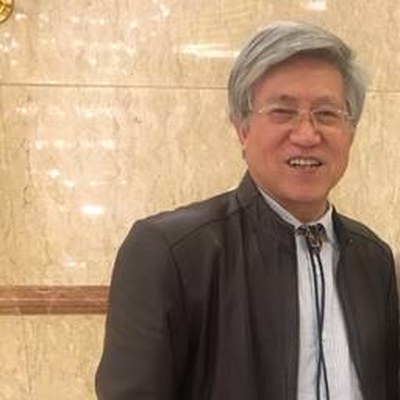
苏印泉
Su Yinquan
人物简介
杜仲叶林栽培模式创立者,推动杜仲叶列入《中国药典》。
事迹
如果说过去杜仲以“皮”入药、以“剥皮”取材,苏印泉则让杜仲的价值长在了“叶”上。作为西农杜仲研究团队的中坚,他通过大量对比试验,确定“一株丛生6枝、每枝长至3~4米”的叶林栽培模式,一亩杜仲林可年产干叶约1.5吨。
这一模式使杜仲利用从“砍一棵树”变为“收一片林”,从根本上降低了叶用资源的成本。他还联合国内专家推动杜仲叶正式列入《中国药典》,为杜仲功能食品与大健康产业打开合规之门,并因此获杜仲科研联盟授予的“终身成就奖”。
重要活动 / 事件
- 确定“一株6枝、每枝3~4米”的叶林模式(亩产干叶约1.5吨)
- 指导在新疆奎屯戈壁荒地种植杜仲成林
- 主持中日合作杜仲叶资源利用相关工作
代表贡献
- 创立杜仲“叶林”栽培模式
- 让利用从“砍一棵树”变“收一片林”
- 推动杜仲叶列入《中国药典》
- 获杜仲科研联盟“终身成就奖”
Profile
Creator of the Eucommia leaf-forest model; helped list Eucommia leaf in the Chinese Pharmacopoeia.
Story
Where Eucommia was once used as bark — obtained by felling and stripping — Su Yinquan grew its value on the leaves. A mainstay of the NWAFU team, extensive trials fixed a model of “six shoots per stump, each grown to 3—4 m”, yielding about 1.5 t of dry leaf per mu.
The model turned utilization from “felling a tree” into “harvesting a forest”, fundamentally cutting the cost of leaf resources. He also worked with peers to have Eucommia leaf formally listed in the Chinese Pharmacopoeia — opening a compliant path for functional foods and health products — and received a “Lifetime Achievement” award from the Eucommia research alliance.
Milestones
- Fixed a “6 shoots per stump, 3—4 m each” model (~1.5 t dry leaf/mu)
- Guided Eucommia afforestation on Gobi wasteland in Kuitun, Xinjiang
- Led China—Japan cooperation on leaf-resource utilization
Key Contributions
- Created the Eucommia “leaf-forest” model
- From “felling a tree” to “harvesting a forest”
- Helped list Eucommia leaf in the Pharmacopoeia
- Received a “Lifetime Achievement” award

i 杜仲 · 杜仲全产业链大数据平台i DuZhong · Eucommia Full-Chain Data Platform
iduzhong.factorydossier.com