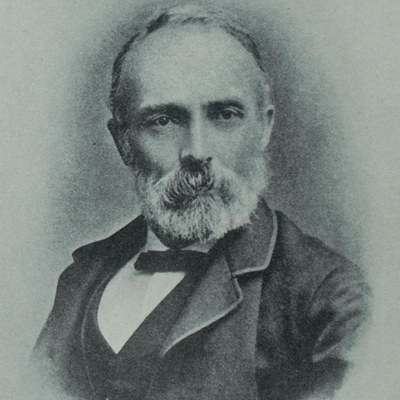
丹尼尔·奥利弗
Daniel Oliver
人物简介
1890年首次科学描述并命名杜仲 Eucommia ulmoides Oliv.,记述其组织中的银丝弹性胶质。
事迹
1890年,英国皇家植物园(邱园)植物学家丹尼尔·奥利弗(Daniel Oliver)在《胡克植物图谱》(Hooker’s Icones Plantarum) 上首次对杜仲进行科学描述,并定名为 Eucommia ulmoides Oliv.——这个拉丁学名沿用至今,种加词源自其果实与叶片“神似榆科(Ulmaceae)”的观察。
他特别记述了杜仲最惊人的特征:几乎所有幼嫩组织——树皮、叶片、叶柄、果皮——折断拉开时都会显现“无数银丝般的弹性胶质”。作为独科、独属、独种的“活化石”树种,杜仲的分类地位曾长期存疑,正是从奥利弗的这次命名开始,它进入了世界植物学的视野。
代表贡献
- 1890年为杜仲定立学名 Eucommia ulmoides Oliv.
- 首次科学描述杜仲组织中的弹性胶质
- 将中国特有树种引入世界植物学
Profile
In 1890 first scientifically described and named Eucommia ulmoides Oliv., noting its silvery elastic gum.
Story
In 1890, Kew botanist Daniel Oliver first described Eucommia scientifically in Hooker’s Icones Plantarum and named it Eucommia ulmoides Oliv. — a Latin name still in use, its epithet reflecting how the fruit and foliage “at once suggest the elm family (Ulmaceae).”
He singled out its most astonishing trait: nearly all young tissues — bark, leaves, petioles, pericarp — when snapped and drawn apart reveal “innumerable silvery threads of elastic gum.” A living-fossil tree of one family, one genus, one species, Eucommia’s classification long puzzled botanists; Oliver’s naming marked its entry into world botany.
Key Contributions
- Coined the name Eucommia ulmoides Oliv. (1890)
- First scientific account of its elastic gum
- Brought a China-endemic tree into world botany

i 杜仲 · 杜仲全产业链大数据平台i DuZhong · Eucommia Full-Chain Data Platform
iduzhong.factorydossier.com